Institutional Commitment to Global Engagement: Cross-Cultural Reflections of Faculty, Students, Staff, and Alumnae at Spelman College

This book is a testimony of Spelman College’s commitment to global citizenship, documenting cross-cultural and international experiences and reflections of domestic students who studied abroad, international students’ experiences, Alumnae who studied abroad or have lived abroad and faculty and staff who have lived abroad or led students abroad. This book distinctively reveals life stories of global engagements that no one else could tell but the contributors who bring life experiences through their international visits. Through a well-curated and engaging collection of narrative stories, this book captures the richness that comes from crossing boundaries, understanding cultural differences, and embracing the knowledge that comes from encounters with disparate perspectives.
International Student Mobilities and Voices in the Asia-Pacific Letters to Coronavirus

This edited volume explores core questions on education and transnational mobility in a time characterized by a global pandemic, recasting them through the lenses of regimes, experiences, and aspirations. The volume brings together 20 short essays in the form of letters addressed to the coronavirus and written by international students , together with eight striking illustrations that depict emotive scenes from the essays, and eight academic commentaries that analytically link these personal narratives to broader societal structures. This book represents a timely intervention, providing an intimate glimpse into young people’s hopes and the challenges they face concerning their education and mobility.
Community Engagement Abroad: Perspectives and Practices on Service, Engagement, and Learning Overseas
A landmark in our understanding of international community-engaged learning programs, this book invites educators to rethink everything from disciplinary assumptions to the role of higher education in a globalizing world. Tapping the many such programs developed at Michigan State University during the last half-century, the volume develops a comprehensive framework for analyzing study-abroad programs with a community-engagement focus. More than a how-to guide, it also offers seven theoretically framed case studies showing how these experiences can change students, faculty, and communities alike. The purposeful broadening of who is involved in these types of international learning programs leads to conceptual transformation and self-reflection within the participants. The authors take the reader on a fascinating journey through how they changed as a result of designing and delivering programs in full collaboration with community partners. The arguments given in this volume for developing truly reciprocal, mutually beneficial partnerships beyond the academy are powerful and persuasive.
Historically Underrepresented Faculty and Students in Education Abroad

This book examines how the unique perspectives of BIPOC faculty and students must be integrated into the undergraduate curriculum to expose students of color to education abroad experiences, enhance cultural awareness and sensitivity, and lend to a broader diversity and inclusion perspective. This edited volume, written by authors of color, argues that education abroad programs not only provide essential academic and cultural enrichment but can also be an important nexus of innovation. When approached within a creative, interdisciplinary, and holistic framework, these programs are ripe with opportunities to engage various constituencies and a potent source of strategies for bolstering diversity, recruitment, retention, and graduation. Despite a tendency to view study abroad as a luxurious option for persons with wealth and means, the editors and their authors argue that global education should be thought of as a fundamental and integral part of higher education, for all students, in a global era.
A House Where All Belong: Redesigning Education Abroad for Inclusive Excellence

This book brings together a diverse group of scholars and practitioners to build bridges between the existing literatures on advising approaches, inclusive pedagogies, and inclusive excellence to situate education abroad within the broader context of inclusive excellence within higher education to answer the question:
How can we integrate inclusive practices to expand the outcomes and benefits of education abroad for all students, with the goal of achieving inclusive excellence?
By connecting this scholarship with promising practices in the field and the guidance found in the Standards of Good Practice, practitioners in education abroad and beyond will find this collection of readings both actionable and inspiring for their work to deepen the impact of education abroad by means of the principles of inclusive excellence.
Constructing Student Mobility: How Universities Recruit Students and Shape Pathways between Berkeley and Seoul
The popular image of the international student in the American imagination is one of affluence, access, and privilege, but is that image accurate? In this provocative book, higher education scholar Stephanie Kim challenges this view, arguing that universities—not the students—allow students their international mobility. Focusing on universities in the US and South Korea that aggressively grew their student pools in the aftermath of the Great Recession, Kim shows the lengths universities will go to expand enrollments as they draw from the same pool of top South Korean students.
Kim closely follows several students attending a university in Berkeley and a university in Seoul. They have chosen different paths to study abroad or learn at home, but all are seeking a transformative educational experience. To show how student mobility depends on institutional structures, Kim demonstrates how the universities themselves compel students’ choices to pursue higher learning at one institution or another. She also profiles the people who help ensure the global student supply chain runs smoothly, from education agents in South Korea to community college recruiters in California. Using ethnographic research gathered over a ten-year period in which international admissions were impacted by the Great Recession, changes in US presidential administrations, and the COVID-19 pandemic, Constructing Student Mobility provides crucial insights into the purpose, effects, and future of student recruitment across the Pacific.
Internationalising Higher Education and the Role of Virtual Exchange

This volume introduces Virtual Exchange (VE) as an innovative form of online learning and investigates the myriad ways VE is being carried out across universities, ultimately arguing for the integration of VE into university internationalisation policies and course curricula.
Against the backdrop of increased digitalisation initiatives throguhout universities given the effects of the pandemic, chapters focus not only on providing new research findings, but also on providing a comprehensive introduction and argumentation for the use of VE in university education and also in demonstrating how it can be put into use by both university decision-makers and educators. Reviewing the limitations of the activity, this timely work fundamentally posits how VE and blended mobility more broadly could be developed in future higher education initiatives.
This book will be of interest to researchers, academics, scholars, and students involved with Open & Distance Education and eLearning, Technology in Education, and the study of higher education more broadly. Those interested in methods for teaching and learning, as well as educational research, will also benefit from this volume.
Sustainable Education Abroad: Striving for Change
Scholars and practitioners from around the globe come together in this volume to identify the role global student mobility plays in climate impact and identify promising practices that can be implemented to make change.
Conveying both urgency, as well as a sense of hope and opportunity, this volume will help the field of education abroad familiarize stakeholders with the sustainability challenges we face as a field and take the necessary steps forward to do better.
U.S. Power in International Higher Education
U.S. Power in International Higher Education explores how internationalization in higher education is not just an educational endeavor, but also a geopolitical one. By centering and making explicit the role of power, the book demonstrates the United States’s advantage in international education as well as the changing geopolitical realities that will shape the field in the future. The chapter authors are leading critical scholars of international higher education, with diverse scholarly ties and professional experiences within the country and abroad. Taken together, the chapters provide broad trends as well as in-depth accounts about how power is evident across a range of key international activities. This book is intended for higher education scholars and practitioners with the aim of raising greater awareness on the unequal power dynamics in internationalization activities and for the purposes of promoting more just practices in higher education globally.
Careers in International Education: A Guide for New Professionals
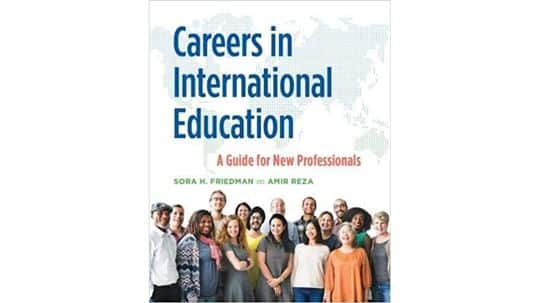
Careers in International Education: A Guide for New Professionals is a practical guide to planning the first 5 to 7 years of a career in international education. Readers consider professional performance and context, practical tools and resources, and different career trajectories. The book includes essays from leaders in the field and a career action plan.
Higher Education Systems Redesigned From Perpetuation to Innovation to Student Success

Long an afterthought of the American higher education ecosystem, multi-campus systems have become more important than ever. In recent years, leading higher education systems have engaged in transforming the way they work, scaling best practices, leveraging data and analytics, and creating platforms to optimize and personalize these systems for increasingly diverse students. In Higher Education Systems Redesigned, leaders of these efforts share their insights into “systemness” and how to facilitate sustainable change in a system setting while navigating and leveraging tensions between campus and system priorities. Highlighting examples of successful realignment of these priorities with a focus on contextualized design and implementation, the book charts a shift in the aim of systems. Rather than perpetuating existing norms as they have traditionally done, systems are taking measures to spark innovation across campuses and use evidence-based practices to foster student access and completion rates, better serve communities, and drive social mobility and economic growth. Each chapter concludes with a list of takeaways to guide other system leaders and administrators. One of the few recent examinations of higher education systems, Higher Education Systems Redesigned offers a theoretical and practical framework for how systems can continually evolve.
Unintended Consequences of Internationalization in Higher Education

By presenting case studies of internationalization in institutions of higher education around the world, this volume identifies unforeseen or unintended impacts within and across countries.
With contributions from Africa, Asia, Europe, Latin America, Middle East, and North America the volume considers the nature and origin of positive and negative consequences of internationalization policy and practice in national contexts, while also offering uniquely comparative insights. Chapters consider how internationalization is reflected in curricula, teaching, research, and mobility initiatives to highlight common pitfalls, as well as best practice for effective, sustainable, and equitable internationalization globally. Using a critical lens, the book explores how internationalization offers opportunities for learning, for entrepreneurial change, and for knowledge dissemination, and generates paradoxes and dilemmas in terms of political and ethical issues for individuals, communities, and the institutions themselves.
Foregrounding the study of internalization in countries not typically studied, this book is a valuable resource for researchers and academics with an interest in internationalization, comparative and international education, and the sociology of education.
Designing Second Language Study Abroad Research
This edited book brings together contributions from scholars in different international and educational contexts to take a critical look at the design and implementation of second language Study Abroad Research (SAR). Examining data sources and types, research paradigms and methods, and analytic approaches, the authors not only provide insight into the field as it currently stands, but also offer recommendations for future research, with the aim of revitalizing inquiry in the field of SAR. This book will be of interest to applied linguists, as well as educators and education scholars with an interest in researching international study.
American Universities in the Middle East and U.S. Foreign Policy
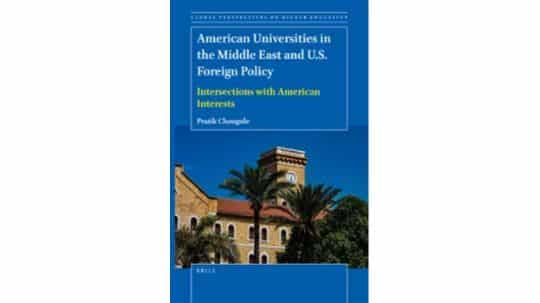
The drive to promote American-style higher education is among the most longstanding and enduring features of U.S. foreign policy in the Middle East. Since its earliest engagements in the region, the U.S. government has looked to American universities to promote Washington’s interests and values. This book analyzes how American universities in the Middle East relate to U.S. foreign policy and how this relationship has evolved amid shifting U.S. priorities through two world wars, the Cold War, and the War on Terrorism. American Universities in the Middle East and U.S. Foreign Policy focuses on four sets of case studies: (1) The American University of Beirut; (2) The American University in Cairo; (3) American universities in Afghanistan and Iraq; and (4) Education City in Qatar.
At a time when policymakers are litigating core tenets of U.S. Middle East policy and new actors are entering the region’s higher education space, this book provides a resource to understand the geopolitical role of American universities in the Middle East.
Higher Education and the COVID-19 Pandemic

COVID-19 caused massive disruptions in the higher education sector across the world. The transition to online learning exposed the deep-rooted inequalities between countries, systems, institutions, and student groups in terms of the availability of information technology infrastructure, internet access and digital literacy, as well as prior training and experiences of faculty in online education. This volume explores various aspects of the impact of the pandemic on higher education management including how university administration responded to the crisis, and the role of local and national government agencies in academic support and higher education delivery. The key findings highlight the importance of better organisation and preparedness of higher education systems for future crises, and the need for a better dialogue between governments, higher education institutions and other stakeholders. The book calls for a collective response to address the digital divide among various groups and financial inequalities within and between the private and public universities, and to plan for the serious challenges that international students face during crisis situations.
Voices from the South: Decolonial Perspectives in International Education

Inspired by the Editors’ work with U.S. students studying abroad throughout Latin America and including voices from colleagues working across the Global South, including in Argentina, Chile, Puerto Rico, Colombia, Peru, Senegal, India, and Jordan, this volume seeks to reverse the replication of imperialist and colonial patterns in Global North-to-Global South student mobility by passing the microphone to study abroad professionals based in the Global South. Their experiences and scholarship offer a rich, nuanced, and very current perspective on the challenges colonial attitudes and behaviors present to the field of education abroad and it’s future.
Shaping a Humane World Through Global Higher Education: Pre-Challenges and Post-Opportunities During a Pandemic
In this book, each author reflects on events since the conference that occurred during the writing of this book and shares their vision of what still needs to be addressed to advance issues of higher education leadership, training, student development, disability education, and relevant programming in countries around the world. Within these discussions are targeted discussions on how to address some of the critical issues of our time, including a focus on access, diversity, and inclusion as elements intended to frame a just and fair Humane World. The authors represent five countries: Australia, Kenya, Malaysia, Nepal, and the United States. Their voices represent issues important in both the Global North and the Global South and what in particular is needed to design essential policies and training required to achieve success.
The Guide to COIL Virtual Exchange
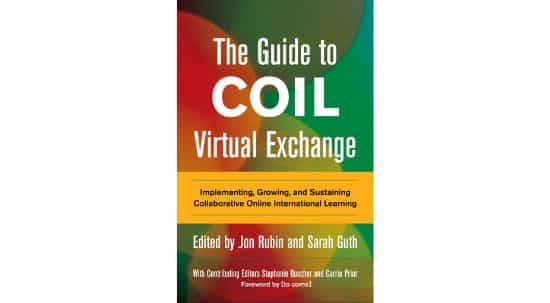
Implementing, Growing, and Sustaining Collaborative Online International Learning
Edited by Jon Rubin and Sarah Guth
Contributions by Stephanie Doscher and Carrie Prior
Foreword by Hans de Wit
Mestenhauser and the Possibilities of International Education

By Nick Gozik & Heather Barclay Hamir
Prioritizing International Student Well-Being
By Nick Gozik & Heather Barclay Hamir
Global Trends in Career Education and the Needs of International Students
By Rich Kurtzman
Like a Fish Out of Water

By Rich Kurtzman
The Handbook of International Higher Education, 2nd edition
COVID-19 and Higher Education in the Global Context: Exploring Contemporary Issues and Challenges

Off-Campus Study, Study Abroad, and Study Away in Economics

Global Higher Education During COVID-19: Policy, Society, and Technology

Internationalising Programmes in Higher Education: An Educational Development Perspective

Internationalization for an Uncertain Future
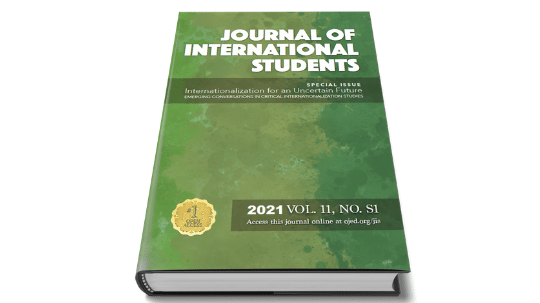
Vol. 11 No. S1 (2021): Special Issue
Engaging International Alumni as Strategic Partners

America Calling: A foreign student in a country of possibility

U.S. Power in International Higher Education

Today’s global campus: Strategies for reviving international enrollments and study abroad
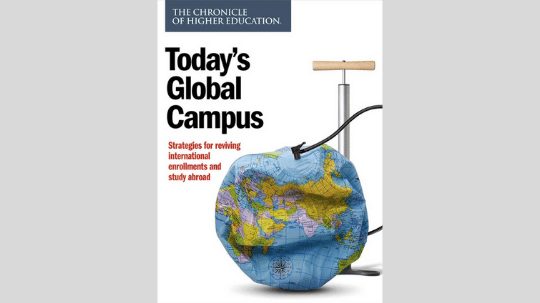
Education Abroad Advising to Students with Disabilities

Empires of the mind? (Post)Colonialism and decolonizing education abroad
CAPA Occasional Publication Series, No. 9 – FREE
Mind the Gap, Global Learning at Home and Abroad
Internationalizing Honors
Digital Experiences of International Students
Shanton Chang & Catherine Gomes
Global Perspectives on International Student Experiences in Higher Education: Tensions and Issues

Edited by Krishna Bista
Study Abroad and the Quest for an Anti-Tourism Experience

by John J. Bodinger de Uriarte & Michael A. Di Giovine, Editors
Inequalities in Study Abroad and Student Mobility: Navigating Challenges and Future Directions

Edited by Suzan Kommers & Krishna Bista
Reflective Intercultural Education for Democratic Culture and Engaged Citizens

Code of Ethics for Education Abroad, 3rd Ed.

Transforming Study Abroad: A Handbook

Undergraduate Research Abroad: Approaches, Models and Challenges

The Art of World Learning: Community Engagement for A Sustainable Planet

The Social Lives of Study Abroad: Understanding Second Language Learner’s Experiences Through Social Network Analysis and Conversation Analysis

The International Education Handbook: Principles and Practices of the Field
Education Abroad and the Undergraduate Experience: Critical Perspectives and Approaches to Integration with Student Learning and Development
Promoting Inclusion in Education Abroad: A Handbook of Research and Practice

Education Abroad Operational Management: Strategies, Opportunities, and Innovations – Free Download
Community-Based Global Learning: The Theory and Practice of Ethical Engagement at Home and Abroad